
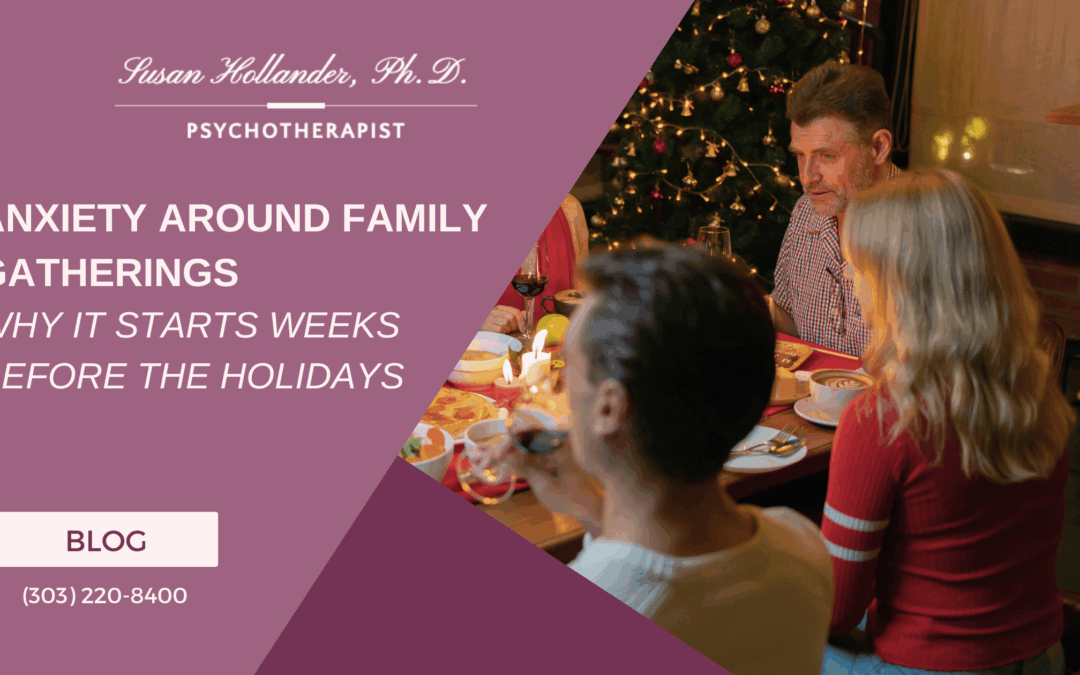
The holidays begin long before the suitcases are packed. Invitations go out, plans take shape, and the thought of upcoming gatherings brings back that familiar tension. Many people notice anxiety around family gatherings weeks before they happen. It’s not just about who will be there, but how old family dynamics, stress, and anxiety return in recognizable ways.
Here along the Front Range, holiday gatherings are more than logistics and travel itineraries. Lights go up early across Denver neighborhoods, and traffic thickens along I-25 as people head north, south, and into the foothills. The days shorten, the air cools, and expectations build. For some, returning home feels comforting. For others, it reopens patterns that are harder to leave behind.
The Mind Rehearses Before Family Events
In the weeks leading up to a family gathering, the mind starts to prepare. It replays old conversations, anticipates tension, and plays out scenarios that haven’t happened yet.
This is anticipatory anxiety, the body’s alarm system activating before anything occurs. The brain releases stress hormones, muscles tighten, and nights become more tossing and turning than real rest. You might notice your chest tighten while sitting in traffic or your rapid heartbeat while planning what to wear.
These physical symptoms often mirror what happens with social anxiety disorder symptoms, including overthinking, self-consciousness, and a sense of threat that feels out of proportion. The body reacts as if the gathering has already started. Even imagining a family event can trigger the same stress response as living it, because the brain doesn’t always separate what’s imagined from what’s real.
“The greatest weapon against stress is our ability to choose one thought over another.” — William James
Why Family Gatherings Trigger Social Anxiety
Family dynamics have a powerful pull. You might find yourself slipping back into old roles: the quiet one, the peacemaker, the responsible one. These patterns surface quickly, even when you know they no longer fit.
A relative comments too freely, a parent criticizes, or a familiar topic like politics or money stirs up more reaction than you expect. What seems minor to someone else leaves your body tense for hours.
This is how social anxiety disorder often appears. The nervous system reacts to potential conflict as if it were danger. The goal isn’t to avoid people, but to stay safe, even if that safety means silence or distance. The body stays on alert: heart beating faster, muscles tight, thoughts circling. The fatigue that follows lasts long after everyone goes home.
These reactions are common in other anxiety disorders as well. The body starts to expect tension, even during otherwise comfortable social events, and the same cycle repeats until something changes.
When Stress and Anxiety Build Over Social Situations
Stress and anxiety grow when you try to manage every detail in the pursuit of perfection. You plan ahead, rehearse what to say, and imagine the worst possible consequences on repeat. That constant scanning keeps the body alert and leaves little room for recovery.
You might over prepare, pour a drink to take the edge off, or pull back to stay calm. For some, alcohol becomes a quick way to cope, especially during the holidays when it pours a little more freely, but each brings only short-term relief and keeps the same anxious loop running. These habits are familiar for people who live with social anxiety symptoms or other mental health disorders.
When the focus shifts from managing tension to avoiding it, the body starts to link family with threat instead of safety. Over time, that connection weakens confidence and trust in family relationships, making closeness feel like work instead of comfort.
Try This Before You Go
Here are a few ways to interrupt the cycle before it takes hold:
- Name what is real. Focus on what’s likely to happen instead of what you imagine. It helps the brain return to the present moment.
- Focus on staying grounded, not getting everything right. Bring what keeps you centered: a walk, a few minutes alone, or steady breathing.
- Set boundaries early. Notice which family members or conversations leave you tense or tired, and plan how to avoid conflict or step away when you need a moment.
- Stay connected to your body. Notice when your pulse speeds up and bring your breathing back to a slower rhythm. Keep your focus on the person in front of you so your attention stays in the moment, not in the worry.
- Reach out for support. Talk with friends who understand what anxiety feels like, or connect with a mental health professional for a broader perspective. Both help you see patterns clearly and approach gatherings with a calmer frame of mind.
These steps support mental and physical health, strengthen communication and social skills, and provide practical ways to manage stress during the holidays.
After the Gathering: Time for a Mental Health Check
Anxiety doesn’t always fade once everyone goes home. Many people notice the quiet drop afterwardL the fatigue, irritability, or sense of emptiness that follows long social situations. It’s the body’s way of coming down from high alert.
Instead of rushing back into routine, give yourself room to recover. Step outside and breathe in the crisp Colorado air, take a warm bath, or spend an evening by the fire with a good book. Simple comforts like these help the body reset and give the mind space to process the event without judgment.
When these reactions become familiar after every gathering, it may help to look at what keeps the pattern going. This is where seeking treatment with a psychotherapist makes a difference. Therapy looks beyond surface worry to uncover what maintains anxiety. Treating social anxiety disorder means understanding how thoughts, emotions, and physical reactions connect, and how awareness interrupts automatic responses. Over time, therapy helps strengthen boundaries, rebuild confidence, and prevent avoiding situations that once caused fear. It supports emotional balance and a sense of well being that lasts well beyond the holiday season.
“Awareness is the greatest agent for change.” — Eckhart Tolle
A Steadier Season
The holidays bring connection and pressure in equal measure. They gather people together, but they also stir the need to pull back. It’s common to feel anxious before seeing family members, and it doesn’t mean something is wrong. The anxiety that comes from social interactions often points to where care and attention are needed most.
The holidays are often a wonderful time of year, but for many, they bring anxiety instead of ease. It’s normal to experience social anxiety during this season and to need space from certain social situations. Recognizing these patterns is part of emotional health, not a failure of it.
This kind of work is what Dr Susan Hollander helps clients with in her practice. She provides therapy for individuals across Colorado, available online or in person from her Englewood office, just a short drive south of Denver. Dr Hollander works with people who experience social anxiety, helping them understand how these patterns affect both body and mind, and develop practical ways to respond to anxiety spiral without triggering that response.
Working with a mental health professional provides the kind of professional help that benefits every part of daily life, shaping how you spend time with others during the holidays and throughout the year.
Learn more about managing anxiety, social phobia, depression and more services that Dr Hollander offers.
Feeling anxious about family gatherings?
Anxiety doesn’t have to control how you connect or spend time with others. Therapy offers practical ways to manage stress, understand old patterns, and build steadier relationships during the holidays and beyond.
Susan L. Hollander, Ph.D., LLC
6067 South Kingston Circle
Englewood, CO 80111
(303) 220-8400
slhollanderphd@gmail.com
Author Bio
Dr. Susan Hollander, Ph.D., is a licensed psychotherapist with over 30 years of experience supporting individuals navigating depression, anxiety, trauma, and life transitions. Known for her warm, integrative approach, she combines evidence-based therapies with compassionate, individualized care to help clients reconnect with their inner resilience.
Dr. Hollander holds a doctorate in clinical social work. She is committed to reducing stigma and expanding access to gentle, effective treatment options. Her practice centers around meeting clients where they are—with empathy, clarity, and hope.
When she’s not in session, Dr. Hollander writes to empower readers with accessible, trauma-informed mental health education. Her mission is simple: to help people find light, one gentle step at a time.
Anxiety Therapy in Colorado — Find Calm and Confidence
Care that meets you where you are—gentle pacing, evidence-based skills, and a path back to steadiness, ease, and connection. Online statewide and in-person sessions available in Englewood and surrounding areas.