
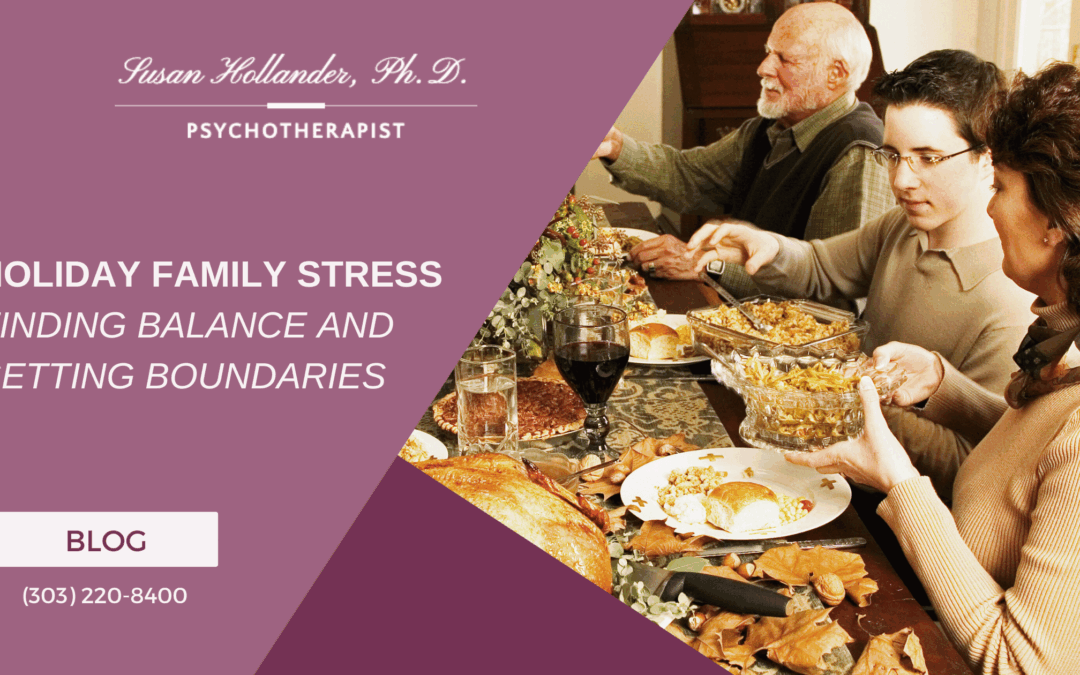
Holiday Family Stress Is About Emotion, Not Obligation
In Colorado, the holiday season starts quietly. Snow settles on the foothills, lights glow across Denver’s Civic Center Park, and mountain towns like Breckenridge and Estes Park welcome visitors hoping to slow down for a bit before the new year begins.
For some, it’s the most wonderful time of the year. For others, it’s a season that brings more pressure than peace. Everything looks calm on the outside, but many adults feel something different inside. Holiday stress rarely starts with a busy to-do list or a tight travel itinerary. It usually comes from what lingers, the old expectations and family dynamics that reappear when family members get together, and understanding how anxiety shows up in these stressful family settings make the season easier to navigate.
Trying to keep everyone comfortable while staying calm takes energy. When you stop striving for perfection, the holidays become easier to manage. They’re a chance to slow down, take a deep breath, and focus on what matters most.
When Family Gatherings Bring Old Patterns Back
Sometimes holiday stress builds slowly; sometimes it appears the second you walk through the door. Even after years of change, family gatherings have a way of bringing familiar patterns back into play. Complex parent–child dynamics often resurface during these moments, especially between mothers and adult daughters. A few words, a tone, or an expression that doesn’t quite land the way it should can stir old emotions. The reaction comes fast because it’s about more than what’s happening now.
If you notice tension building, take a deep breath before you respond. Even a short pause helps you decide how you want to handle the moment. Step outside for air and give yourself a minute before returning to the room. Those small resets protect your mental health and keep the day from feeling too heavy.
You don’t have to keep everyone comfortable. Setting boundaries, choosing when to listen, when to speak, and when to walk away, helps you stay calm. The more you let go of fixing every moment, the easier it becomes to enjoy the time you have together.
“Almost everything will work again if you unplug it for a few minutes, including you.” — Anne Lamott
Family Traditions and the Pressure of Gift Giving
Holiday traditions are meant to bring people together. Families sit down to the same meals, hang the same decorations, and get together in the same familiar places to feel connected and keep memories close. For some, those moments bring comfort. For others, they bring a mix of emotions or a reminder of strained relationships and how things have changed.
If a tradition starts to feel like an obligation, it’s okay to do things differently. Simplifying doesn’t erase what matters, it often helps everyone relax. Practicing self-compassion and acceptance can also ease the pressure to please everyone or meet unrealistic family expectations.
Gift giving can bring the same kind of pressure. What begins as a thoughtful gesture turns into stress about money, time, or expectations. You might spend more money than planned, second-guess your choices, or feel discouraged if your effort isn’t noticed or returned the way you hoped.
Simple changes like these can help reduce stress and keep the holidays peaceful:
- Decide what truly fits your time and energy this year.
- Give within your comfort level and trust that it’s enough.
- Focus on connection instead of presentation.
Family traditions and gift giving are meant to create connection, not pressure. When they begin to take more than they give, a few small changes can bring the season back into balance.
Take a Deep Breath and Practice Self Care
Holiday stress builds quietly. It’s not always about arguments or big moments—it’s the slow effort of keeping up. A deep breath gives you space to pause and notice what’s really happening instead of reacting automatically.
Practice self care with purpose. During the holidays, small choices add up and individual therapy can help you develop self-care routines that last long after the season ends. Also consider:
- Eating food that keeps your energy steady.
- Limiting alcohol intake if it changes your focus or mood.
- Spending time with loved ones who help you feel relaxed.
- Reading, resting, or taking a walk to clear your head.
- Trying gentle exercise, to release tension and restore your balance.
These habits protect your well-being and help you cope when things feel challenging. When you take care of yourself, you’re better able to stay present for the people around you.
Set Boundaries to Protect Mental Health and Connection
Boundaries aren’t rejection; they’re a form of care. They show where your comfort begins and ends. Setting limits can also ease the fear of distance or disconnection that sometimes comes with saying no.
Clear boundaries reduce stress and encourage honesty. When you’re open about your time and energy, relationships often feel lighter. That might mean leaving a gathering early, saying no to a last-minute event, or changing plans when you need time to relax.
If your family situation feels tense or draining, take it seriously. Talk with a psychotherapist in Colorado about ways to manage the anxiety or sadness that can surface this time of year. Parents especially can benefit from therapy that offers perspective and helps them set boundaries with compassion.
When Stress Starts to Feel Heavier
Sometimes holiday stress doesn’t stay on the surface. When it builds through gatherings, travel, or the pressure to keep traditions going, it can turn into something deeper like anxiety or depression. Many people feel this most after the holidays wind down, when the house grows quiet and things slow down.
If you’ve been feeling stressed or emotionally tired, you’re not alone. Parents often try to hold the entire family together, and children may not see how much that takes. Paying attention to your own reactions is an important part of caring for your mental health.
During the holidays, anxiety or depression appear in subtle ways, such as:
- Losing interest in things you usually find enjoyable or fun
- Feeling tense or on edge at family gatherings
- Taking things personally or replaying stressful conversations over and over in your mind
- Having trouble sleeping or finding it hard to take a real break
- Feeling emotionally flat even when surrounded by people you care about
Gentle strategies help. Step outside for a few minutes, read a good book, or talk with friends who listen to you without judgment. These small moments of care create healthy interactions and remind you that less stress doesn’t mean stepping away from the season, it means giving yourself space to recover and reconnect.
Finding Calm in a Busy Season
The holidays have a way of amplifying everything, noise, memories, even silence. It’s easy to rush through them without noticing what you need. Calm often appears when you slow down long enough to see what’s right in front of you.
Give yourself permission to step back once in a while. Sit with a cup of coffee before the house wakes up, take a short walk, or share a quiet laugh with someone you trust. Those small moments matter more than any plan you manage to keep.
Peace doesn’t come from doing more; it grows from paying attention. When you allow the season to unfold instead of trying to control it, it becomes lighter, clearer, and a little more human, a reminder that happiness is rarely about perfection, but about finding a sense of calm where you are.
“Peace is not the absence of conflict, but the ability to cope with it.” — Mahatma Gandhi
Begin the New Year with Greater Ease and Emotional Clarity
The holidays sometimes stir deep emotions, but they also open the door to meaningful change. Dr. Susan L. Hollander, Ph.D. helps individuals and families find balance, healing, and renewed self-understanding through anxiety and depression counseling in Englewood, Colorado, offered both in-person and online.
Contact Dr Hollander today to get started.
Open your heart to change. Transform yourself from the inside to create a calmer, more connected life.
Author Bio
Dr. Susan Hollander, Ph.D., is a licensed psychotherapist with over 40 years of experience supporting individuals navigating depression, anxiety, trauma, and life transitions. Known for her warm, integrative approach, she combines evidence-based therapies with compassionate, individualized care to help clients reconnect with their inner resilience.
Dr. Hollander holds a doctorate in clinical social work. She is committed to reducing stigma and expanding access to gentle, effective treatment options. Her practice centers around meeting clients where they are—with empathy, clarity, and hope.
When she’s not in session, Dr. Hollander writes to empower readers with accessible, trauma-informed mental health education. Her mission is simple: to help people find light, one gentle step at a time.
Susan L. Hollander, Ph.D., LLC
6067 South Kingston Circle
Englewood, CO 80111
(303) 220-8400
slhollanderphd@gmail.com
Anxiety Therapy in Colorado — Find Calm and Confidence
Care that meets you where you are—gentle pacing, evidence-based skills, and a path back to steadiness, ease, and connection. Online statewide and in-person sessions available in Englewood and surrounding areas.